
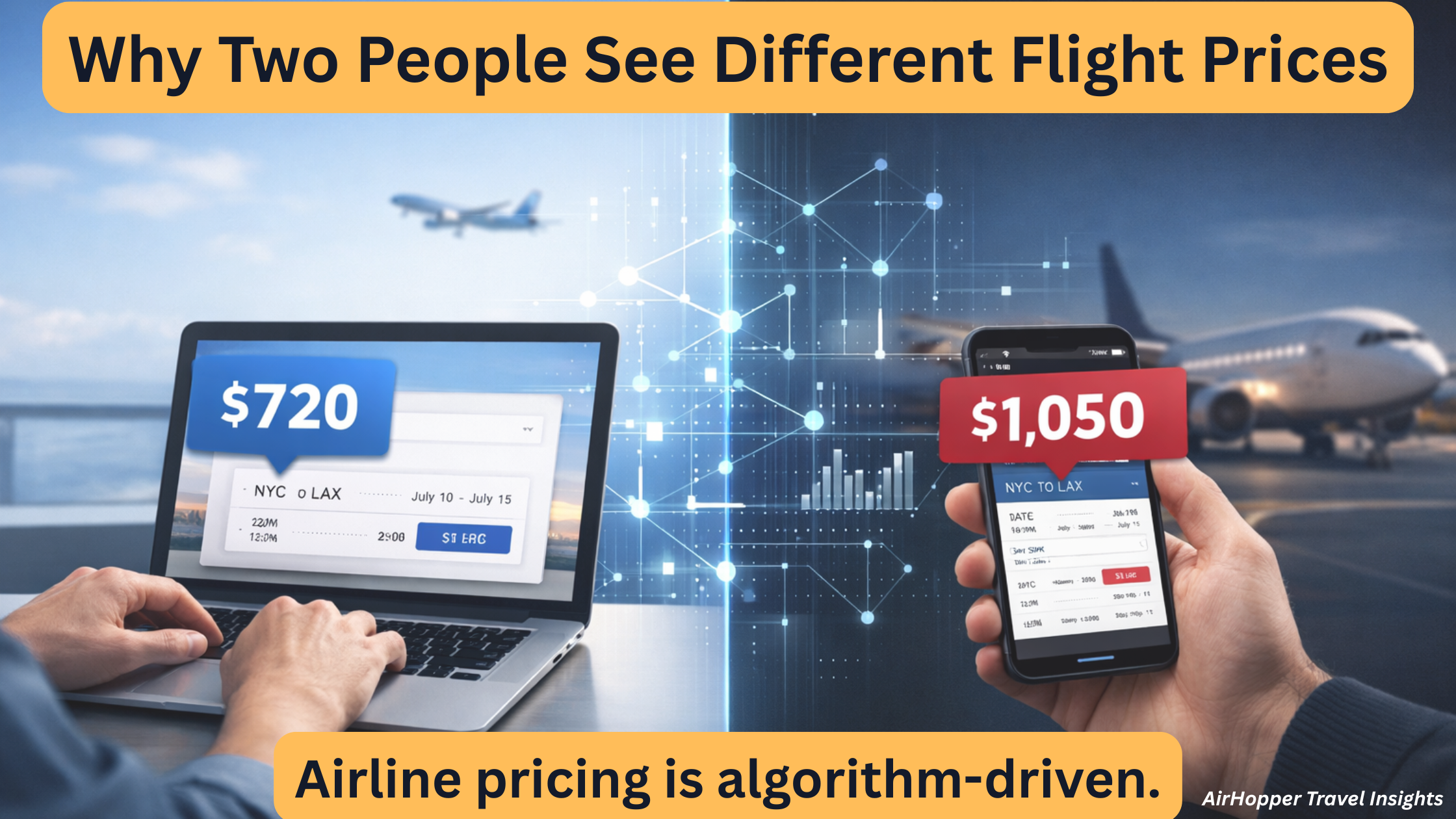

Ever shared a flight link with a friend and heard:
“Why is it showing more expensive for me?”
You’re not imagining things — airline pricing is dynamic, personalized, and algorithm-driven.
In this blog, we’ll break down exactly why two people can see different prices for the same flight, how airline pricing systems work behind the scenes, and smart ways travelers can avoid overpaying.
🧠 How Airline Pricing Actually Works (Simple Explanation)
Quick takeaway: Airlines don’t price seats for people — they price seats for behavior. Airlines don’t have one fixed price per seat.
Instead, they use:
- Dynamic pricing algorithms
- Fare buckets (limited seats at each price)
- Real-time demand signals
Think of flight pricing like stock prices — constantly moving based on data.
🔍 The Real Reasons Prices Differ Between Two People
1️⃣ Search History & Cookies
Airline and OTA websites track:
- How many times you searched the same route
- How recently you searched
- Whether you clicked but didn’t book
📈 More interest = higher perceived willingness to pay.
Result: Prices may rise for you, not others.
2️⃣ Location & IP Address
Your location affects pricing more than you think.
| Factor | Impact on Price |
|---|---|
| Country | Different regional pricing |
| Currency | Exchange-rate buffering |
| Market demand | High-demand cities see higher fares |
Someone searching from India may see a different fare than someone in Canada for the same flight.
3️⃣ Device Type (Yes, Really)
Airlines and OTAs analyze:
- Mobile vs desktop
- iOS vs Android
- App vs browser
Premium devices sometimes show slightly higher fares, assuming higher purchasing power.
4️⃣ Fare Bucket Availability
Each flight has limited seats in each price tier.
| Fare Bucket | Seats Available | Price |
| T | 4 seats | $720 |
| Q | 6 seats | $850 |
| Y | Unlimited | $1,200 |
If one person checks after a bucket sells out, the price jumps.
5️⃣ Time Lag Between Searches
Even a 10–15 minute delay can matter.
Airlines update pricing based on:
- Live bookings
- Seat releases
- Algorithm refresh cycles
That’s why screenshots don’t always match.
6️⃣ Loyalty Status & Logged-In Accounts
When logged in, airlines may:
- Show bundled fares
- Prioritize flexible tickets
- Hide basic economy options
Two users — one logged in, one not — can see different pricing structures.
🚫 Popular Myths (Let’s Clear These Up)
❌ “Always book on Tuesday”
❌ “Incognito mode guarantees cheaper prices”
❌ “Prices drop at midnight”
💡 Reality: Pricing depends on route demand, seat inventory, and timing, not universal hacks.
💡 Smart Ways to Avoid Paying More
✅ What You Can Do
- Compare fares across multiple platforms
- Avoid repeated searches on the same device
- Check one-way combinations instead of round trips
- Be flexible with nearby airports
⚠️ What Actually Works Best
Working with a travel expert who monitors fare behavior manually, understands fare rules, and knows when not to wait.
Algorithms react to data. Humans interpret it.
🤖 Why Booking With a Travel Expert Still Matters
Online tools show prices.
A travel expert:
- Knows when a price will likely rise
- Can combine airlines you won’t see online
- Helps during cancellations and delays
- Explains fare rules before you pay
At AirHopper, we don’t just search — we strategize.
✉️ Final Thought
In a world run by pricing algorithms, informed travelers still win. If two people see different prices for the same flight, it’s not unfair — it’s how modern airline pricing is designed.
Knowing the system gives you power.
📲 Need help locking the right fare at the right time?
Reach out to AirHopper — your human advantage in a world of algorithms.